
How Rhetoric Can Help Us Navigate Social Media?
Last summer, I held a rhetoric course at the Utrecht Summer School (NL). Why did I create it, what does it include, and why do I believe this kind of material is more important today than ever before?
One of the most common criticisms of the education system is that it doesn't teach us to think critically. And one of the most frequent discussions I had during my studies was about how little our school system does to develop public speaking — once we stop reciting poems in primary school, it’s almost forgotten (at least in Croatia).
Drawing on the knowledge I gained while preparing my PhD, I created a five-day summer course, Rhetoric Recrafted: Unleashing Your Superpower for the Modern Age, for the Utrecht Summer School in the Netherlands, where rhetoric takes center stage as a true superpower.
Imagine being able to look at any media or artistic content and see rightthrough it — who it’s meant for, what its purpose is, and which techniques it uses to achieve that purpose. Now imagine being able to create your own message — written or spoken — to achieve exactly what you want.
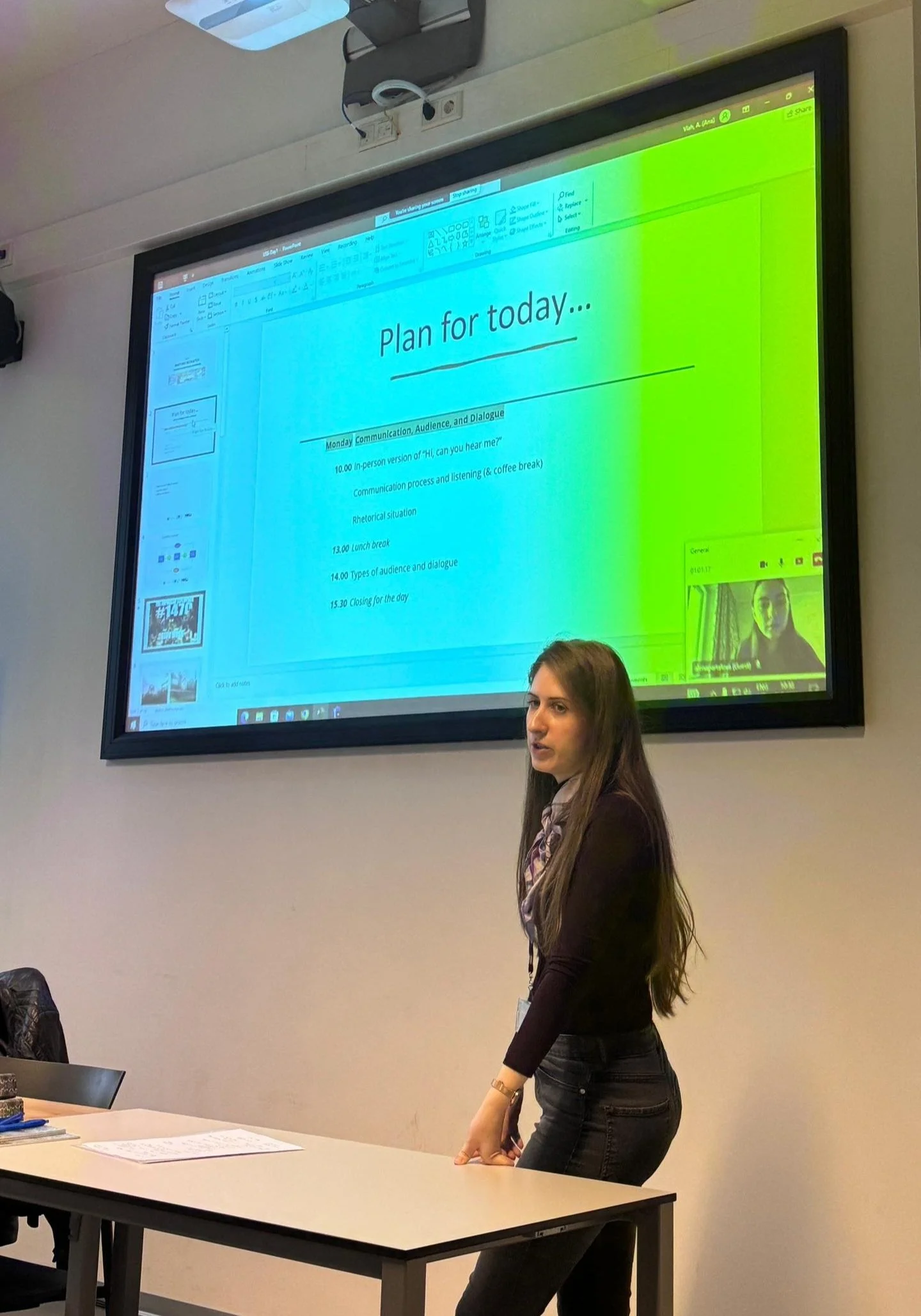
In Utrecht, 2024
How was the course created?
I've been interested in media since childhood, and after volunteering at a radio station and in digital media during university, I’ve spent the last six years working in television. I often read comments on social media, trying to understand how people do (or don’t) think. I love documentaries, and it was actually The Social Dilemma on Netflix that sparked a deeper question in me: could rhetoric help with some of the challenges social media brings? Each day of the course is dedicated to a broad theme, with detailed analyses of current and relevant examples. The idea is that, after the course, participants are equipped with new (rhetorical) tools to approach news, videos, films, advertisements, and digital/interactive platforms. We discuss how persuasion works — and how to build your own arguments — starting from the reasoning and critical thinking skills participants already bring with them to Utrecht.
An example of an activity
Since this is something I’ve been thinking about for years, while creating the course I drew inspiration from old notes and current events. I remembered a brilliant exercise from my student days, taught by Professor Krešimir Bagić (Department of Croatian Studies, Faculty of Humanities and Social Sciences, University of Zagreb) in his stylistics course, which I adapted for this workshop: the literary pitch. Each person chooses a book they’ve recently read and would like to recommend to others. It can be nonfiction, fiction, poetry — anything they like. What matters is that their recommendation includes actual reasons.
The task is fun for both the speaker and the audience (who usually enjoy well-chosen literary suggestions), and throughout the week, I use their claims and arguments as examples. Everyone is invited to analyze and share their findings.
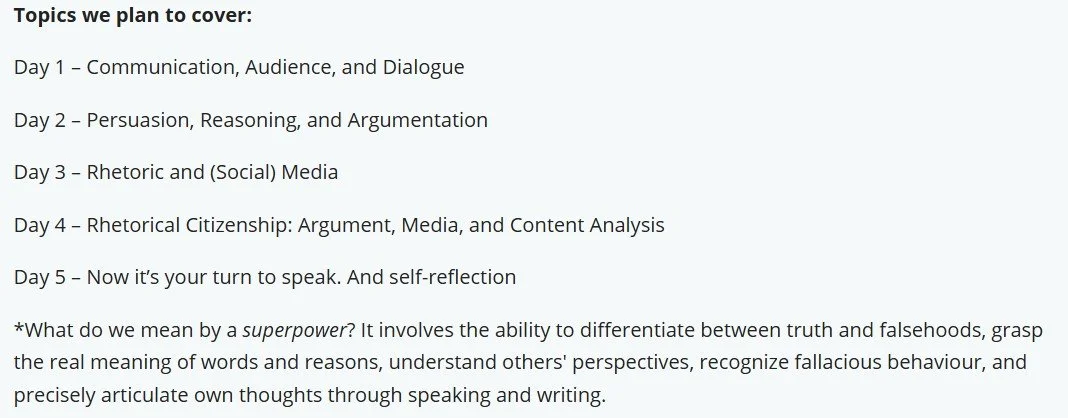
Description from the course website
Isn’t summer for relaxing and going to the beach?
I’ve already mentioned that I’ve taken part in around ten winter and summer schools. While it might sound like these are places for “overachievers who don’t know how to relax,” summer schools actually bring together all kinds of people.
At my very first one — in Denmark (which I once wrote about for Studentski.hr ), the professor would ask us at the end of each day whether the material made sense. And she didn’t ask from a place of superiority. She genuinely cared — because she was exploring ideas alongside us, not above us. Summer schools are valuable because the atmosphere is more relaxed, even for professors. Many use the opportunity to speak about things they’re truly passionate about. I remember an American professor (in Russia!) who gave a talk on why it feels good to watch other people dance.
Summer schools aren't just for students — they’re also a fantastic opportunity for those already working to upgrade their knowledge and skills, or to dedicate a week or two to a hobby or hidden passion.
There’s also the element of travel — a short-term experience of living in another city or country. Not everyone has access to Erasmus exchanges, whether due to time or finances, and a summer school can be a great international alternative.
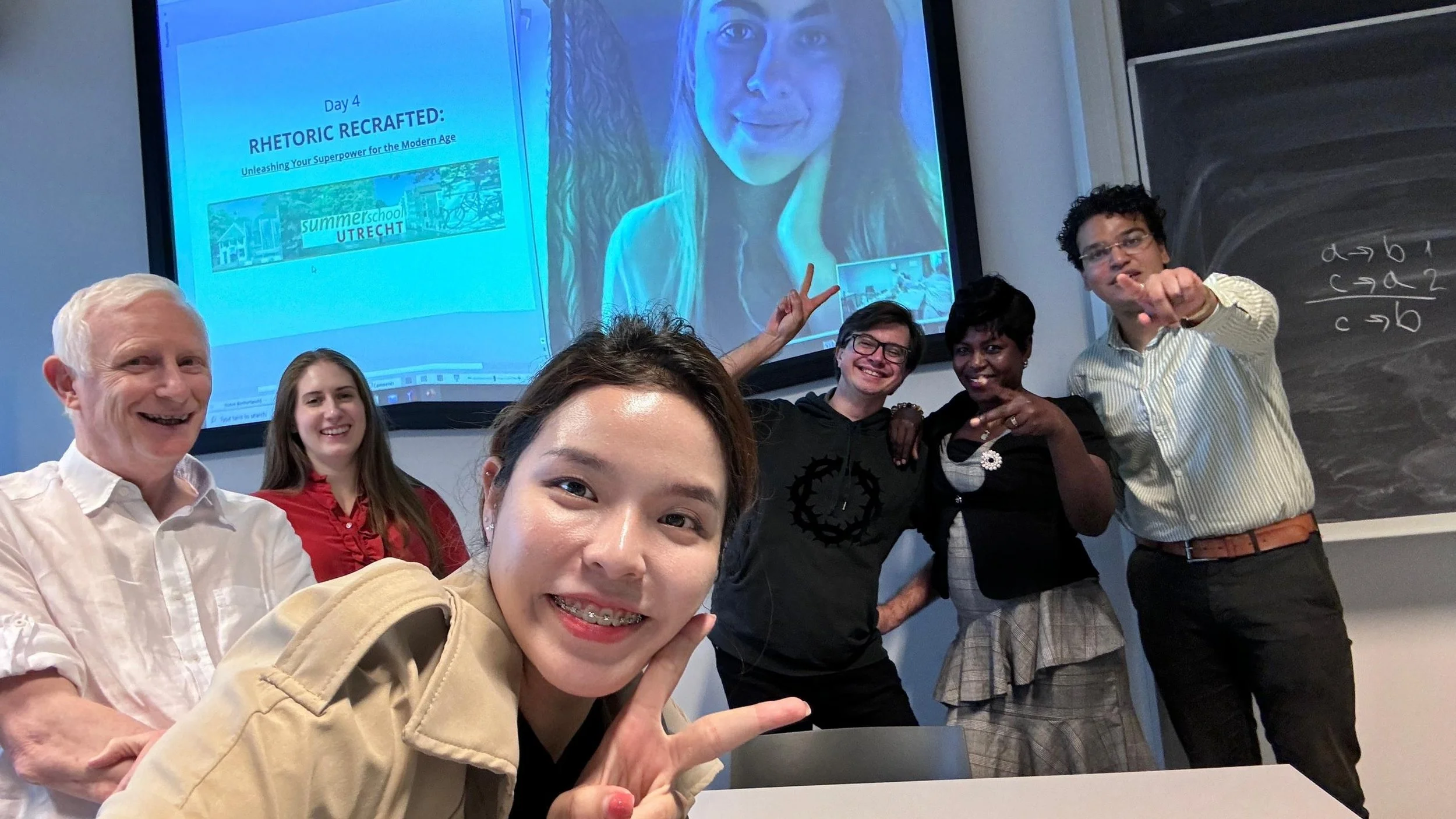
With participants from last year’s course
How can you participate?
Although the Utrecht course is primarily aimed at students, last year I had participants who were older than me. I’d love to give similar lectures, workshops, or thematic days elsewhere. While it's hard to master all the tools in just a few days, it's absolutely possible to open the door to a different way of listening, reading, speaking, and understanding.
If you're a school, organization, or simply a curious individual, get in touch! We can create a one-day workshop or build a longer-term collaboration. I’m open to all ideas.